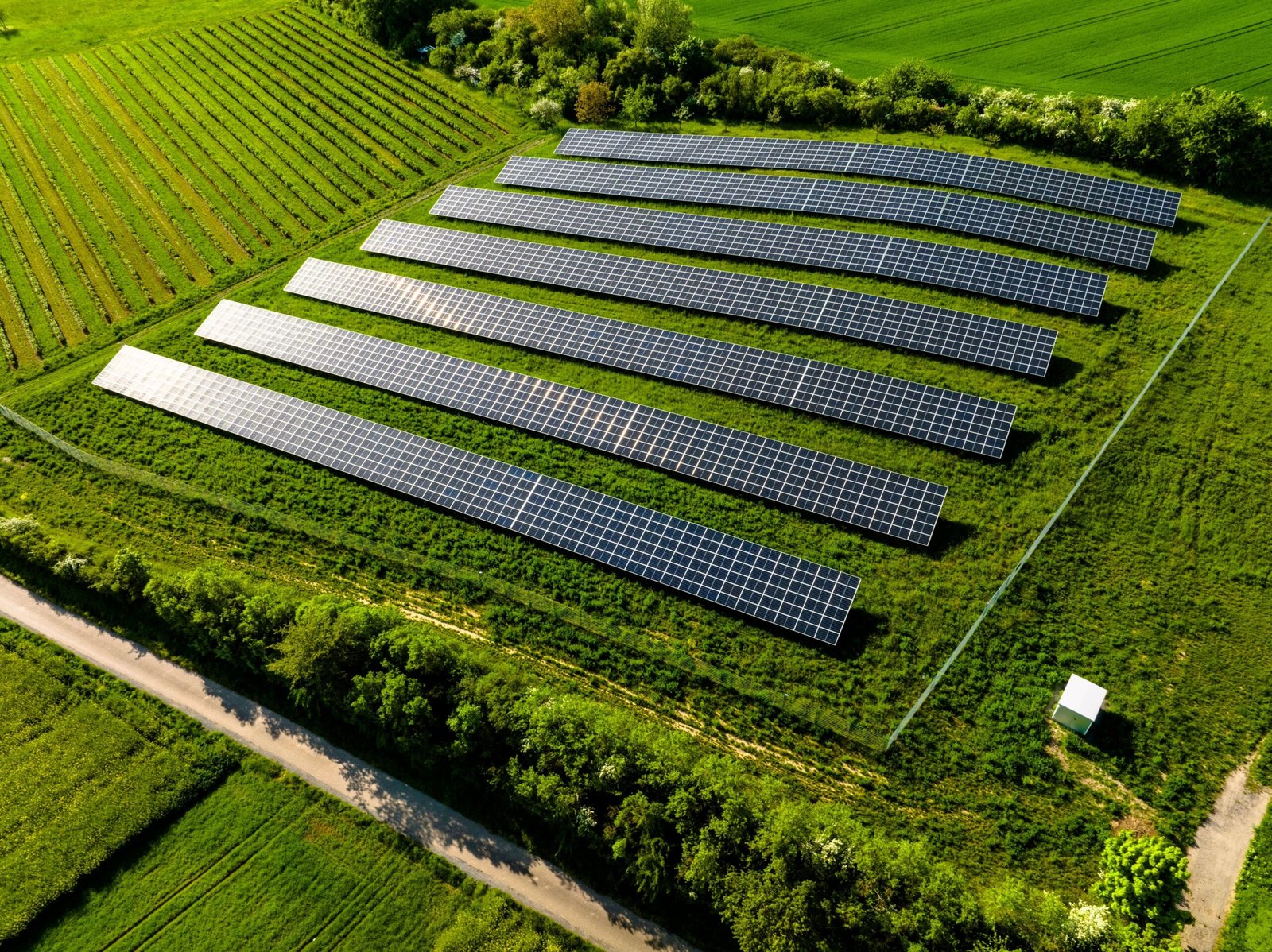
The conversation about solar panels seems to have taken on an extra surge of late (no pun intended!). Not just among the eco-community, but in the mainstream media too, urging farmers and food producers to accept solar panels on their land. Hmmmm…. but we’re wondering, why? Why should they?
Working here in the beautiful, fertile, productive Sheepscombe valley, we can’t help but wonder… why the rush to install solar panels (the use of the word ‘farm’ in this context – so cleverly manipulated – is an insult) on land desperately needed for food production? Why would any country take its precious and limited land resources out of food production, as the latest episodes of wars and world-crises continue to rotate through history, in this case, increasing the UK’s vulnerability in producing more of its own food? When solar panels could so easily be placed in urban areas, where they are needed most (it seems to us), on disused, already developed land, on tops of existing buildings, or in industrial parks (for example.. just a few suggestions) what sort of Government would smother land needed for food, in photovoltaic panels? Especially when so many people state loud and clear they don’t want acres and acres of solar panels across the countryside (see Farmers Weekly magazine on this one). Is anyone listening?
Of course alternative energy sources should be explored; of course there should be less reliance on fossil rules; of course everyone should be responsible for respecting the Earth and its resources (however, not everyone seems to have got that memo, looking at the world’s biggest coal consumers – data courtesy of World Population Review), but… solar panels over food production??
What’s the problem? … we hear you ask; well, even just the most basic research through the scientific studies openly published on Google Scholar, or similar resources, throws up some interesting data. Even in 2018, journalist Michael Shellenberger asked in Forbes Magazine: “If Solar Panels Are So Clean, Why Do They Produce So Much Toxic Waste?”; a study by academics Chowdhuri et al., published in 2020 in the journal Energy Strategy Reviews, discusses the many problems with the disposal of solar panels – which surely need greater discussion – stating “… Solar panels will become a form of hazardous waste when the useful life is over and may harm the environment if they are not recovered or disposed of properly”. This is an issue also explored by the International Chemical Secretariat based in Sweden (“An independent non-profit organisation that advocates substitution of toxic chemicals to safer alternatives”) which raises a similar issue: “Solar panels may very well save the planet. But the way they’re being produced and disposed of right now is seriously hurting the environment”. “The way they’re produced…” Isn’t that an interesting point – a subject worthy of a study of its own.
So can we just raise a few hypothetical “what if…” points here? What if, down the line, it is proven that there are PFAS chemicals in solar panels (Per- and polyfluoroalkyl substances; a group of synthetic organo-fluorine chemical compounds, since you ask)? What if it is proven that they do leak into the earth as solar panels degrade, rendering it useless for food production, because the pollution cannot be cleaned up? What if, in years to come, as the solar panels begin to break down, the manufacturers have gone out of business, or refuse to take responsibility for the disposal of their property (the panels) and just leave the panels where they are – but the farmers would not be able to remove them either, because they don’t officially own them?
Wouldn’t it be great if the current methods to harness renewable energy really are the most natural, sustainable, non-toxic way to access fuel and power on a mass scale, without harming the planet? We wait in hope, but right now, just as simple food producers – not scientists, tech-heads or engineers – it seems as if there are an awful lot of questions about the possible impact of solar panels on the environment, that are still need answers.
These website sites may be of interest, but please undertake your own research:
Chemsec – The International Chemical Secretariat: https://chemsec.org/pfas-waste-from-solar-panels-this-is-something-that-people-in-the-sector-dont-like-to-talk-about/
Energy Strategy Reviews: https://www.sciencedirect.com/science/article/pii/S2211467X19301245
Farmers Weekly – on pros and cons of solar panels on farms: https://www.fwi.co.uk/business/diversification/farm-energy/analysis-the-pros-and-cons-of-solar-farm-development
Farmers Weekly – reporting on protests against solar panels being installed on farmland: https://www.fwi.co.uk/news/uk-wide-protests-held-against-large-scale-solar-farms
Forbes magazine: https://www.forbes.com/sites/michaelshellenberger/2018/05/23/if-solar-panels-are-so-clean-why-do-they-produce-so-much-toxic-waste/
UK Solar Alliance: https://www.uksolaralliance.org/
Wikipedia – for the explanation on PFAS chemicals: https://en.wikipedia.org/wiki/PFAS
World Population Review – on coal consumption by country: https://worldpopulationreview.com/country-rankings/coal-consumption-by-country
Local Community Market Gardens
A Community Supported Agriculture Scheme
Can we just talk about…. Solar panels?